
Multi-tier trailing is the same idea as a regular trailing stop, but with several "tiers" of protection that activate one after another as the trade grows.
The idea: trail loosely while a trade is still small, then tighten the trail more and more as the profit grows. Loose early protection means you don't get shaken out by minor noise; tight late protection means you keep most of a big gain.
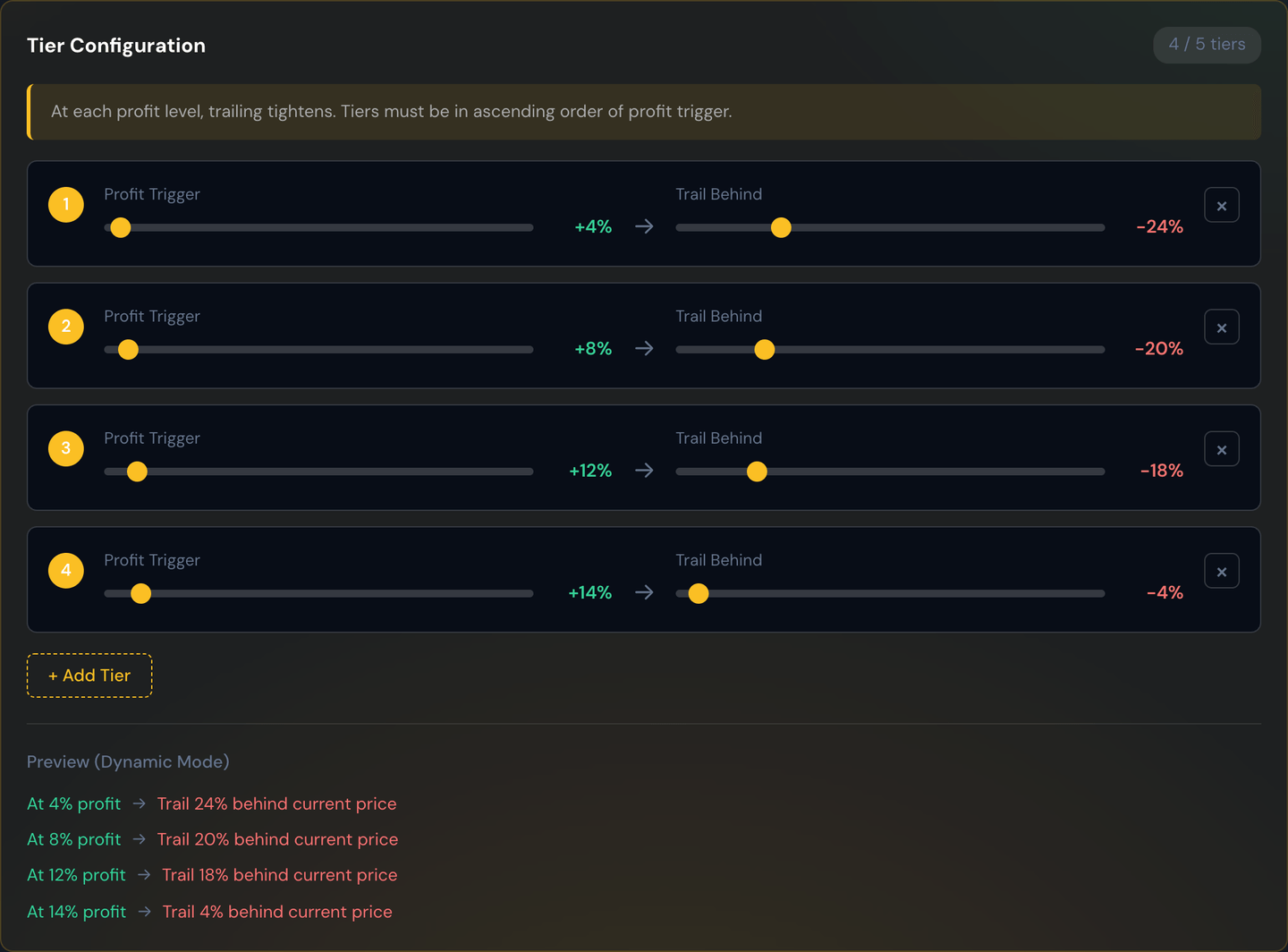
Reading the ladder
Each tier has the same two ingredients as a regular trailing stop:
- A trigger — how much in profit before this tier becomes the active one.
- A trail — how far behind the peak this tier sits.
Higher tiers always have a higher trigger and a tighter trail than the one below.
Worked example
A three-tier ladder might look like this:
| Tier | Trigger | Trail |
|---|---|---|
| 1 | +20% | 15% |
| 2 | +50% | 10% |
| 3 | +100% | 5% |
Walking through it on a trade entered at $1.00:
- Price hits $1.20 → Tier 1 activates with a 15% trail.
- Price hits $1.50 → Tier 2 takes over with a tighter 10% trail.
- Price hits $2.00 → Tier 3 takes over with the tightest 5% trail.
- Price pulls back. Whichever tier is currently active is the one that fires when the trail is breached.
You keep wide protection on a normal-sized move, and you give back almost nothing on a home-run move.

Tip
A multi-tier ladder is the most you'll usually want to think about per trade. Start with two tiers if a three-tier setup feels confusing — you can always add a third later.